
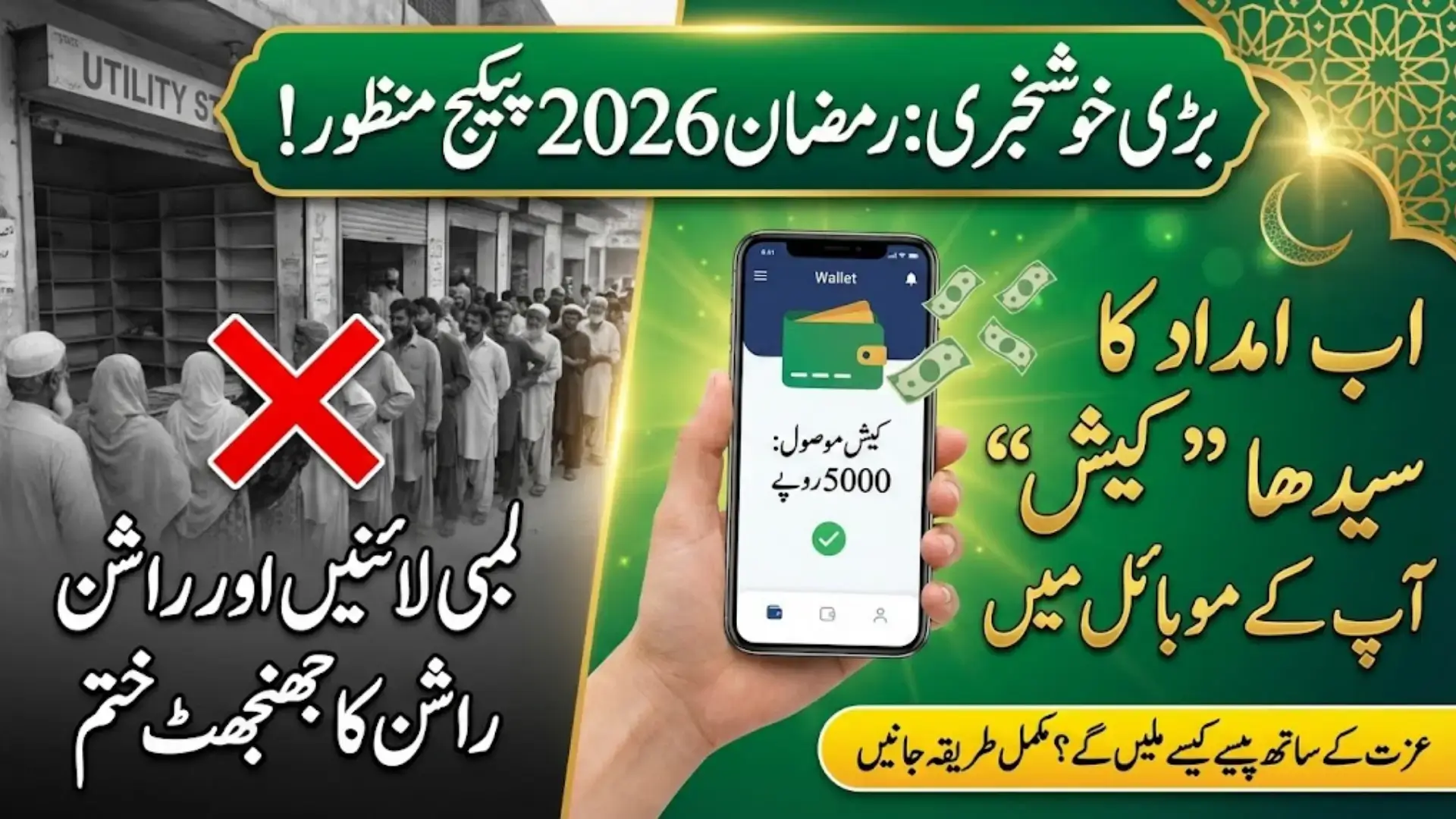
Ramadan 2026 Subsidy Digital Cash Transfer
Ramadan 2026 Subsidy Digital Cash Transfer System federal government of Pakistan has approved a new Ramadan subsidy system for 2026 that focuses on direct digital cash transfers instead of traditional ration-based relief. This decision was taken under the direct supervision of Prime Minister Muhammad Shehbaz Sharif after reviewing the strengths and weaknesses of previous Ramadan packages. The goal is clear: ensure that relief reaches deserving families with transparency, speed, and dignity.
Over the years, I have personally seen people standing in long queues outside utility stores during Ramadan, often facing shortages, favoritism, and humiliation. Keeping these realities in mind, the Ramadan 2026 package has been designed as a more modern, fair, and people-friendly system that relies on technology rather than manual distribution.
You Can Also Read: Federal Board Announces Intermediate Annual Exam Date 2026
Background of Ramadan 2026 Relief Initiative
Ramadan is a spiritually important month, but for low-income families in Pakistan, it also becomes financially challenging. Rising inflation, high food prices, and limited income make it difficult for many households to meet basic needs. Because of this, the government felt it was necessary to rethink how Ramadan relief is provided.
The Ramadan 2026 initiative is the result of months of review and analysis. Instead of repeating old methods, the government focused on creating a system that directly supports families without wasting public funds or allowing misuse.
Key reasons behind launching this initiative include:
- Continuous increase in prices of essential food items
- Public complaints about unfair distribution in past schemes
- Need for a faster and more reliable relief mechanism
Prime Minister’s Key Directives for Ramadan Support
Prime Minister Shehbaz Sharif clearly instructed that the upcoming Ramadan package should be more effective and more beneficial than previous years. He emphasized that relief programs must protect the rights of deserving people and not become opportunities for corruption.
During review meetings, the Prime Minister stressed that financial assistance should be delivered in a way that maintains the dignity and self-respect of beneficiaries. According to his vision, no Pakistani should feel embarrassed while receiving help during Ramadan.
The core directives included:
- Strong action against corruption and misuse
- Priority for genuinely deserving families
- Adoption of digital systems for transparency
Review Meeting and Third-Party Validation Process
A high-level review meeting was held under the chairmanship of the Prime Minister to examine the performance of the federal government’s Ramadan relief program. Special focus was given to third-party validation, where independent auditors reviewed the entire process.
The transparency and authentic audit report of last year’s Ramadan package were appreciated. This validation process helped build confidence that public money was being spent responsibly and provided a foundation for improving the system in 2026.
Important outcomes of the review included:
- Approval of digital cash transfer model
- Continuation of independent audit practices
- Instructions to further strengthen monitoring
Lessons Learned from Last Year’s Ramadan Package
Previous Ramadan packages highlighted several weaknesses, especially in physical distribution systems. Many deserving families were either ignored or forced to rely on connections, while others benefited unfairly.
The government learned that manual systems create more problems than solutions. Digital cash transfers, on the other hand, give families control over their spending and reduce opportunities for corruption.
Major lessons identified were:
- Physical subsidies are difficult to monitor
- Cash assistance is more flexible for families
- Transparency increases public trust
Ending Corruption and Protecting Deserving Beneficiaries
One of the most serious issues in past relief programs was corruption, which deprived deserving people of their rightful support. Fake beneficiaries, political influence, and weak oversight damaged the purpose of welfare schemes.
For Ramadan 2026, the government has prioritized strict monitoring and digital verification. Each transaction will be recorded, making it easier to track funds and prevent misuse.
Anti-corruption steps include:
- Digital verification of beneficiaries
- Automated payment records
- Reduced human involvement in distribution
Shift from Physical Subsidies to Digital Relief Model
In previous years, relief was often provided through discounted items at utility stores. While the intention was good, the execution created long queues, shortages, and frustration among the public.
The Ramadan 2026 package shifts the focus to direct cash assistance, allowing families to buy what they actually need according to their household priorities. This approach respects personal choice and reduces logistical pressure on government institutions.
Advantages of this model include:
- Freedom for families to manage expenses
- Reduced crowding at stores
- Faster delivery of assistance
Introduction of Digital Wallet-Based Cash Transfers
Relief funds will be transferred through digital wallets, ensuring privacy and dignity for beneficiaries. Instead of standing in public lines, families will receive assistance directly on their mobile phones.
This system is especially helpful for women and elderly people, who often face difficulties accessing physical distribution points.
Main benefits of digital wallets:
- Secure and private transactions
- Easy access through mobile phones
- No middlemen or agents involved
Role of the State Bank in Cashless Distribution
The State Bank of Pakistan will play a key role in overseeing the cashless distribution of Ramadan relief funds. Its involvement ensures that payments are secure, regulated, and properly monitored.
This move also supports Pakistan’s long-term goal of promoting a digital and cashless economy, especially for social welfare programs.
The State Bank will:
- Oversee payment systems
- Coordinate with banks and digital wallets
- Ensure financial security and compliance
Utility Stores System Reforms for Transparency
Although digital cash transfers are the main focus, the government has also improved the utility stores system. These reforms aim to ensure the availability of essential food items at fair prices during Ramadan.
Transparency measures have been introduced to prevent hoarding, overpricing, and supply disruptions.
Reforms focus on:
- Improved stock monitoring
- Clear pricing mechanisms
- Better supply chain management
Social Protection Wallet System Under BISP
The Social Protection Wallet system has been introduced under the Benazir Income Support Program to manage digital relief payments. This system connects verified beneficiaries directly with financial assistance.
By integrating BISP data with digital wallets, the government aims to ensure that support reaches the right people without delay.
Key features include:
- Verified beneficiary database
- Digital identity checks
- Direct fund transfers
Free SIM Distribution for Access to Digital Relief
To ensure digital inclusion, free SIMs are being distributed to deserving individuals under the Social Protection Wallet system. This step is particularly important for people in rural areas who may not have reliable mobile access.
Free SIMs enable beneficiaries to receive alerts, manage wallets, and stay informed about their relief funds.
Objectives of this initiative:
- Enable access to digital wallets
- Improve communication
- Support financial inclusion
Timeline for Digital Relief Fund Distribution
According to official announcements, all Ramadan relief funds will be distributed digitally starting March 2026. This clear timeline allows families to prepare in advance and plan their expenses better.
| Phase | Key Activity | Expected Time |
|---|---|---|
| Planning | System approval and coordination | Early 2026 |
| Verification | Beneficiary data confirmation | February 2026 |
| Distribution | Digital cash transfers | March 2026 |
Expected Impact on Low-Income Families
The Ramadan 2026 digital subsidy system is expected to benefit millions of low-income households across Pakistan. Direct cash transfers provide flexibility and reduce dependency on limited store-based options.
Families will be able to manage their needs more effectively, whether it is food, utilities, or medical expenses.
Expected outcomes include:
- Improved food security
- Reduced exploitation
- Timely access to assistance
How the New System Improves Dignity and Respect
One of the most important aspects of this system is dignity. Receiving assistance privately through a digital wallet removes the embarrassment associated with public distribution.
Relief becomes a personal matter, delivered quietly and respectfully, which is how social welfare should work.
Human-centered benefits include:
- Respectful assistance
- No public dependency
- Empowered households
What Makes Ramadan 2026 Package Different From Previous Years
The Ramadan 2026 package stands out because it is technology-driven, transparent, and audit-backed. Unlike earlier programs, it focuses on outcomes rather than announcements.
By combining digital wallets, State Bank oversight, and third-party audits, the government has created a more reliable relief system.
Final Overview
The approval of the Ramadan 2026 digital cash transfer system marks a significant shift in Pakistan’s approach to social welfare. It reflects lessons learned from the past and a commitment to protecting the rights of deserving citizens.
If implemented properly, this model can become a long-term solution for future relief programs, ensuring fairness, transparency, and dignity for all.