
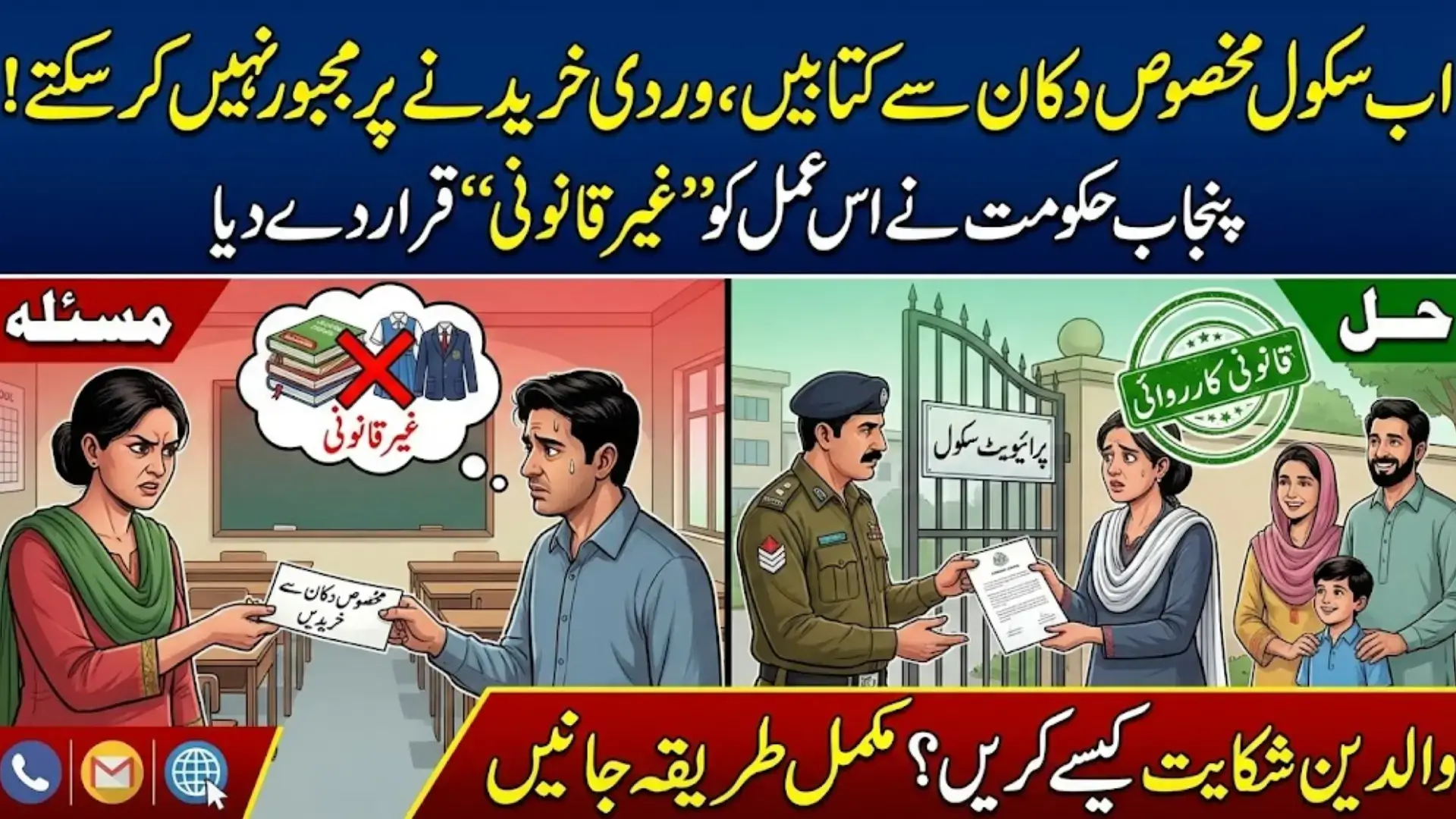
Punjab Takes Notice as Private Schools
The Punjab government has taken serious notice of a widespread issue affecting thousands of parents across the province. For years, many private schools have been accused of indirectly or directly forcing parents to purchase textbooks, uniforms, and stationery from specific shops. These demands often leave parents with no real choice and result in higher expenses, especially at the start of the academic year when financial pressure is already high.
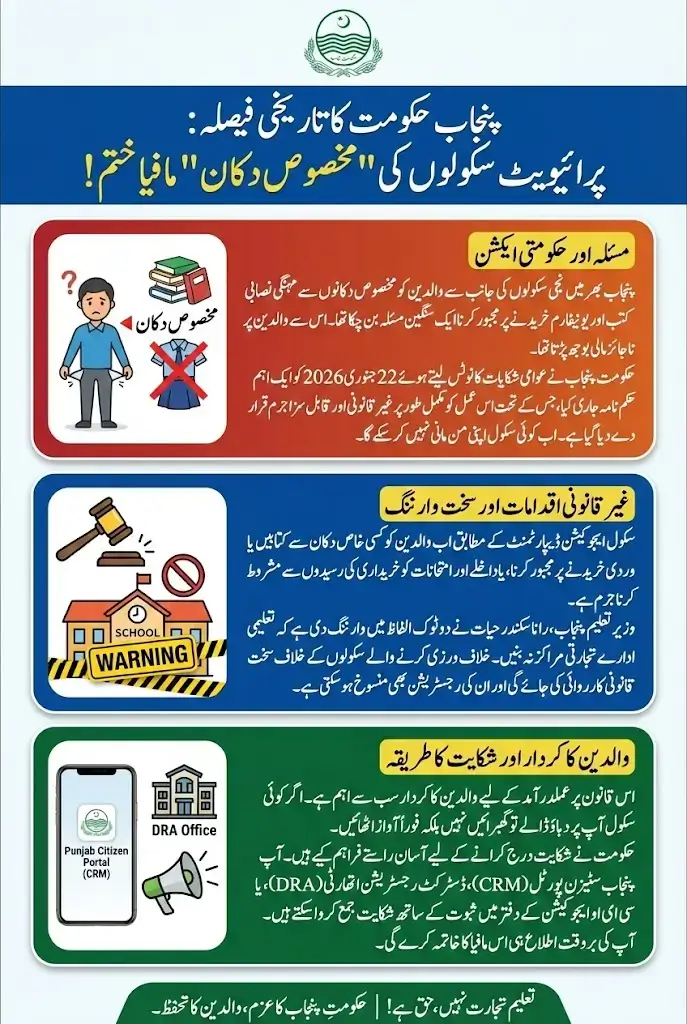
To address this growing concern, the School Education Department of Punjab issued an official public notice dated January 22, 2026. The notice makes it clear that such practices are illegal and will no longer be tolerated. This decision reflects the government’s intention to bring transparency, fairness, and relief to parents who have long complained about unnecessary financial burdens imposed by private schools.
You Can Also Read:Pakistan Math Contest For Grade 5 Students—Register Online by 03 February 2026
Government Steps In to Protect Parents’ Rights
In recent months, complaints from parents have increased significantly, highlighting how some schools were misusing their authority. Parents reported being told that admission, exams, or class participation could be affected if purchases were not made from specific vendors. In many cases, prices at these shops were noticeably higher than market rates.
The Punjab government stepped in after reviewing these complaints and consulting relevant laws. Officials acknowledged that education should not become a commercial tool. This intervention aims to restore balance between schools and parents and to ensure that families are not exploited under the name of discipline or standardization.
Education Minister’s Clear Message to Private Schools
Punjab’s Minister for Education, Rana Sikandar Hayat, delivered a firm and unambiguous warning to private educational institutions. He stated that schools have no legal authority to force parents into buying school-related items from any particular shop or supplier.
According to the minister, education institutions are meant to guide students academically, not control household spending decisions. He emphasized that any school found violating these instructions would face strict legal action. His statement sends a strong message that the government is ready to act rather than merely issue warnings.
What the Law Says About Forced Purchases
The government notice clearly refers to Section 7A(10) of the Punjab Private Educational Institutions (Promotion & Regulation) Ordinance, 1984. This section explicitly prohibits private schools from compelling parents or guardians to buy books, uniforms, or any other school items from designated outlets or service providers.
In simple terms, the law gives parents the freedom to decide where they shop. Schools can define academic requirements, such as syllabus or uniform color, but they cannot dictate the place of purchase. This legal protection exists to prevent misuse of authority and ensure fair treatment for families.
Practices Declared Illegal by School Education Department
The School Education Department has clearly outlined the practices that are now considered serious violations of the law. Schools engaging in these activities risk facing penalties and regulatory action.
Key practices declared illegal include:
- Forcing parents to buy textbooks from specific bookshops
- Making uniforms mandatory from selected vendors only
- Linking student assessment, exams, or admission with purchase receipts
- Pressuring parents through teachers, notices, or verbal instructions
These actions are no longer considered minor issues but serious breaches of education regulations.
Consequences Schools May Face for Violations
The Punjab government has made it clear that violations will not be ignored. Schools found guilty of pressuring parents may face penalties under the law and relevant education rules. Authorities have been instructed to take firm action to discourage repeat offenses.
Possible consequences may include fines, warnings affecting registration status, and further administrative action. This strict approach is intended to ensure long-term compliance rather than temporary correction.
Role of Parents in Stopping Unfair School Pressure
Parents are a key part of enforcing these new directions. Without formal complaints, many violations remain undocumented, allowing schools to continue unfair practices without consequences.
The education minister has urged parents to speak up and report any unlawful demands. When parents report such issues, it helps authorities identify problematic institutions and take corrective action. Collective awareness and timely reporting can significantly improve the education environment.
How to File a Complaint Through Official Channels
To make reporting simple and accessible, the Punjab government has provided multiple official channels. Parents can submit complaints without fear, ensuring that their concerns are formally recorded and addressed.
Parents can report violations through:
- Punjab Citizen Relationship Management (CRM) portal
- District Registration Authority (DRA) office
- Office of the Chief Executive Officer of the District Education Authority
Below is a simple table explaining reporting options:
| Reporting Channel | Where to Contact | Purpose |
|---|---|---|
| CRM Portal | Online Punjab Government System | Digital complaint registration |
| DRA Office | District Level Authority | Action against registered schools |
| District Education Authority | CEO Office | Administrative investigation |
District Authorities’ Responsibility in Enforcement
District-level authorities have been directed to act promptly on complaints. Once a report is received, officials must verify the claim and initiate appropriate action if a violation is confirmed.
This system ensures accountability at the local level and reduces delays. It also sends a clear message to schools that monitoring is active and enforcement is not limited to provincial offices alone.
Why This Decision Matters for Families Across Punjab
For most families in Punjab, education already consumes a significant portion of monthly income. Forced purchases add unnecessary stress, particularly for middle- and lower-income households struggling with inflation.
This decision restores choice and fairness. Parents can now compare prices, buy affordable alternatives, and manage school expenses more responsibly. It also encourages healthy competition in the market rather than monopolies created through school pressure.
What Parents Should Do Moving Forward
Parents are advised to remain aware of their rights and not feel intimidated by school administrations. If any school demands purchases from a specific shop, parents should question the instruction and report it if necessary.
Helpful steps for parents include:
- Keeping written notices or messages from schools
- Discussing issues with other parents for collective reporting
- Using official complaint channels only
- Acting promptly instead of waiting
By staying informed and united, parents can help ensure that schools comply with the law and focus on education rather than commercial interests.