
E-Challan Fake Websites Block PTA
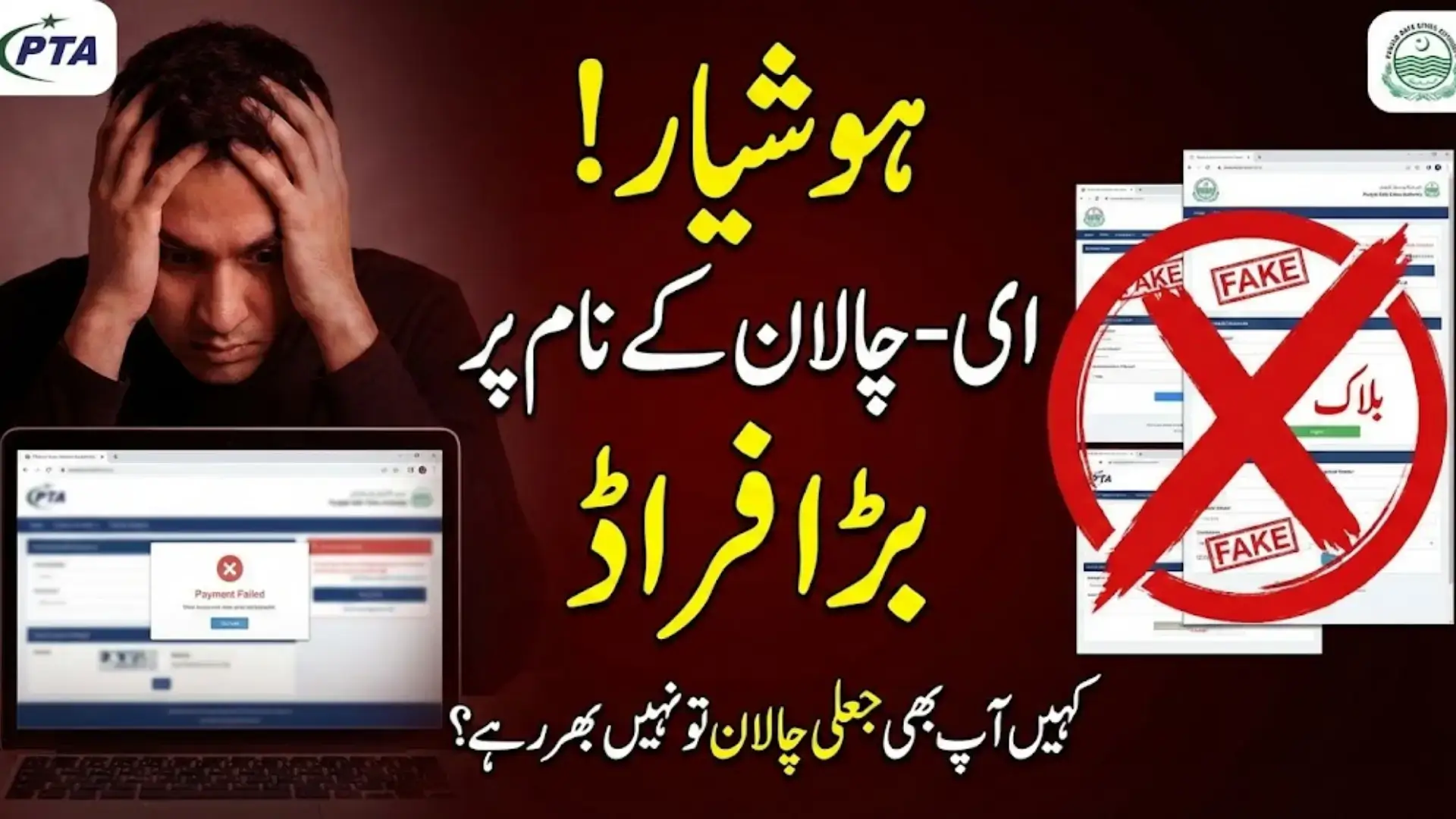
E-Challan Fake Websites Block PTA Online government services have become a daily necessity for Pakistani citizens. From paying utility bills to checking traffic challans, people now rely heavily on digital platforms. However, with this convenience, online fraud has also grown rapidly. Recently, a serious issue surfaced when dozens of fake e-challan websites started deceiving citizens by pretending to be official government portals.
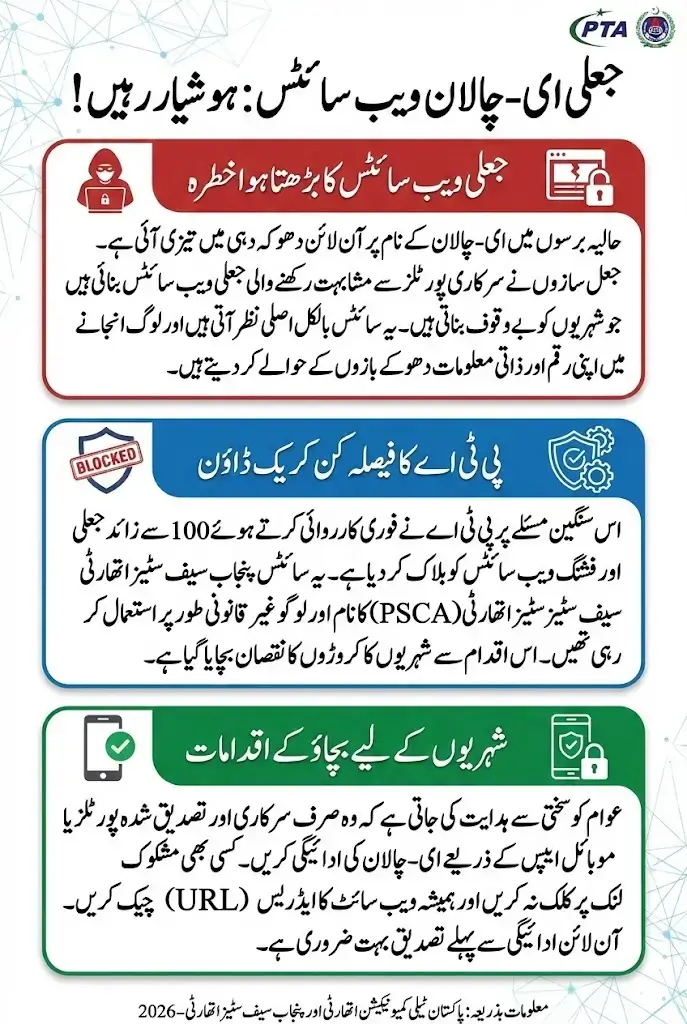
To address this growing threat, the Pakistan Telecommunication Authority (PTA) took decisive action and blocked more than 100 fake and phishing websites that were illegally collecting online payments by misusing the name and logo of the Punjab Safe Cities Authority (PSCA). This move has been widely welcomed, especially by vehicle owners who were unknowingly at risk of losing their money.
You Can Also Read: Prime Minister Ramadan Package 2026: Big Decision Regarding Giving Cash
Rising Threat of Fake E-Challan Websites in Pakistan
Over the past few years, cyber fraud in Pakistan has changed its shape. Earlier, scams were mostly linked to fake SMS messages or phone calls. Now, fraudsters are targeting trusted public services like e-challans. During my work as a journalist, I have personally come across citizens who believed they were paying legitimate traffic fines, only to later discover that their money had gone to fake websites.
These fraudulent websites looked highly professional. They used official-looking designs, government-style language, and even copied logos of PSCA. For an ordinary citizen, especially someone not familiar with digital verification, it was extremely difficult to differentiate between real and fake platforms.
Key reasons why fake e-challan websites became dangerous include:
- High public trust in government online services
- Similar appearance to official websites
- Lack of digital awareness among many users
PTA’s Major Crackdown on Fraudulent Online Platforms
The Pakistan Telecommunication Authority acted after receiving a formal report from the Punjab Safe Cities Authority. Once the fraudulent websites were verified, PTA immediately blocked more than 100 such platforms across the country. This swift response helped prevent further financial losses and disrupted the operations of online scammers.
Blocking these websites was crucial because even a single fake portal can mislead thousands of users in a short period. The action also highlights PTA’s growing role in protecting digital infrastructure and ensuring that citizens can safely use online services in 2026 and beyond.
The impact of PTA’s crackdown can be seen in:
- Immediate shutdown of phishing networks
- Reduced online payment fraud related to e-challans
- Increased confidence in official digital services
How Punjab Safe Cities Authority Detected the Scam
The Punjab Safe Cities Authority was the first to notice unusual activity related to e-challan payments. According to PSCA officials, complaints from citizens and payment mismatches raised serious concerns. Upon investigation, it was revealed that multiple websites were illegally using PSCA’s name and logo without authorization.
After confirming the fraud, PSCA compiled evidence and formally recommended PTA to block these websites. This coordination between institutions reflects a strong commitment to protecting citizens and ensuring transparency in public services.
PSCA’s investigation focused on:
- Unauthorized branding and logo usage
- Illegal collection of online payments
- Public complaints regarding challan records
Method Used by Scammers to Trap Citizens
The scam followed a simple but effective pattern. Fraudsters created fake websites optimized for search engines so they appeared in search results when citizens looked for “e-challan payment” or similar terms. Many users clicked these links assuming they were official.
Once on the website, users were asked to enter vehicle details and make online payments. The payment went directly into accounts controlled by scammers. Victims often realized the fraud only when their challan status did not update in official records.
Common scam techniques included:
- Fake websites with government-style layouts
- Urgent messages about pending challans
- Payment pages without official verification
Official Warning Issued for the Public
A spokesperson for PSCA issued a clear warning to the public, advising citizens not to make payments on unverified or suspicious websites. The spokesperson emphasized that even if a website appears official, citizens must verify its authenticity before entering any personal or financial details.
In Pakistan, many people assume that websites appearing on search engines are reliable. Authorities have therefore stressed the importance of awareness and caution, especially when money is involved.
Citizens are advised to:
- Avoid paying challans through unofficial websites
- Double-check website addresses carefully
- Report suspicious platforms to authorities
Verified Channels for Safe E-Challan Payments
To remove confusion, PSCA has clearly stated that citizens should use only officially approved platforms for e-challan payments. These platforms are directly connected with government systems and ensure secure transactions.
Using verified channels not only protects citizens from fraud but also ensures that challan records are updated correctly, helping vehicle owners avoid legal complications later.
| Payment Method | Official Platform |
|---|---|
| Online Website | echallan.psca.gop.pk |
| Mobile Application | Public Safety App |
Legal Action Against Fake Safe City Websites
PSCA has confirmed that legal action against individuals and groups involved in creating fake Safe City websites has been expanded. Authorities have adopted a zero-tolerance policy, making it clear that misuse of government institutions for financial fraud will not be ignored.
This legal crackdown is not only meant to punish offenders but also to deter future cybercriminals. It reassures citizens that their financial safety is a top priority.
Authorities are working on:
- Identifying website operators
- Blocking illegal payment channels
- Strengthening cybercrime enforcement
How Citizens Can Protect Themselves from Online Payment Scams
While government action is essential, citizens also play a key role in protecting themselves. Based on my observations, many scams succeed simply because users do not verify basic details before making payments.
By adopting simple habits, citizens can significantly reduce the risk of falling victim to online fraud:
- Always use official government websites or apps
- Never trust links shared through unknown sources
- Avoid entering card or banking details on suspicious pages
Why This Action Matters for Digital Trust in 2026
The blocking of fake e-challan websites is an important step toward strengthening digital trust in Pakistan. As more public services move online, protecting citizens from fraud becomes critical. PTA and PSCA’s timely action shows that institutions are learning from emerging threats and responding effectively.
In 2026, digital governance will continue to expand. This case serves as a reminder that awareness, regulation, and cooperation between authorities are essential to ensure that online services remain safe, reliable, and beneficial for ordinary citizens across Pakistan.